Wuxi Dongsheng Spray Granulating Drying Machinery Factory! We are a seasoned professional manufacturer specializing in various types of spray dryers!
中文版
Hotline::+86-510-83382327


Overview
The laboratory high-speed centrifugal spray dryer is suitable for fields such as chemical, petrochemical, metallurgical, food and pharmaceutical, ceramics, and forest chemical industries. It features complete functions, small floor space, high efficiency, and few process steps, making it an ideal product for laboratory research.
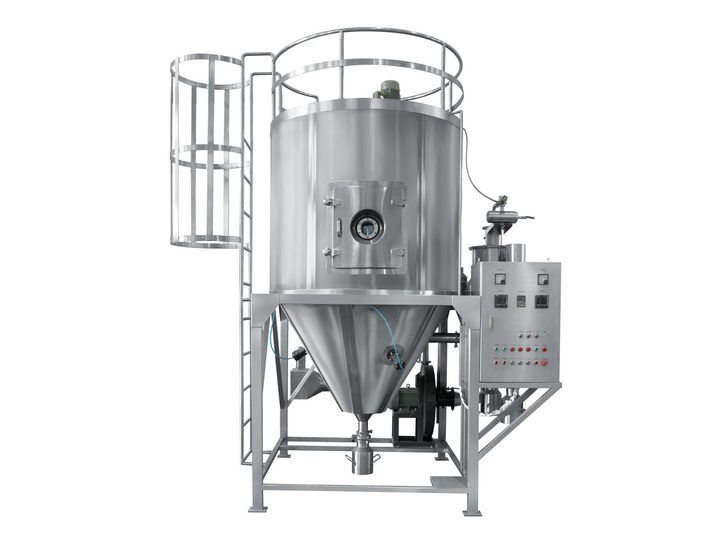
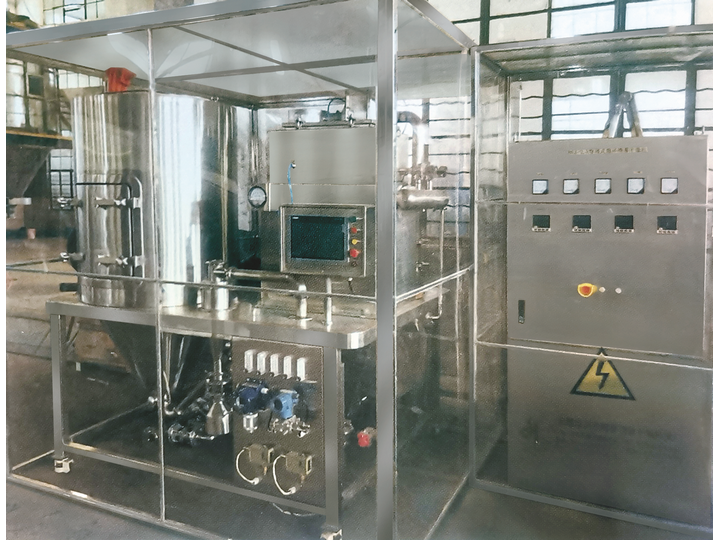
Overview
The laboratory high-speed centrifugal spray dryer is suitable for fields such as chemical, petrochemical, metallurgical, food and pharmaceutical, ceramics, and forest chemical industries. It features complete functions, small floor space, high efficiency, and few process steps, making it an ideal product for laboratory research.
The working principle of the laboratory high-speed centrifugal spray dryer is based on the combination of centrifugal atomization and rapid hot-air drying technology. During operation, ambient air is filtered and heated, then enters the drying chamber evenly in a spiral pattern through the hot air distributor at the top of the chamber. Meanwhile, the feed liquid is delivered by a feeding device such as a peristaltic pump to the high-speed centrifugal atomizer at the top of the drying chamber. The atomizing disc of the atomizer rotates at an extremely high speed (typically up to 8,000–30,000 rpm). The feed liquid is thrown out under centrifugal force, forming a fine droplet group with diameters of only a few microns to several tens of microns. These droplets, with their huge surface area, come into co-current contact with the spirally entering hot air and complete intense heat and mass exchange within an extremely short time. Moisture evaporates rapidly, and the solid material is dried into a powder or granular finished product. Finally, the finished product enters collection devices such as a cyclone separator along with the airflow, achieving gas-solid separation.
The performance characteristics of the laboratory high-speed centrifugal spray dryer are mainly reflected in rapid drying, high product quality, flexible operation, and strong adaptability. Its drying speed is extremely fast. After the droplets come into contact with hot air, drying is usually completed within 5 to 15 seconds, and 65% to 98% of the moisture can be evaporated instantly. This characteristic makes it particularly suitable for processing heat-sensitive materials. In terms of product quality, the resulting product has uniform particle size, good flowability and solubility, and high purity. The equipment is easy to operate and precisely controlled. Product particle size and moisture content can be controlled by adjusting parameters, and the heating temperature control accuracy of some models can reach ±1°C. In addition, the equipment has a compact design, is easy to clean, and offers good anti-sticking and anti-moisture absorption capabilities, meeting clean production requirements such as GMP.
The laboratory high-speed centrifugal spray dryer, with its wide material adaptability and excellent drying performance, is used in the R&D stages of numerous industries. In the food industry, it is used to dry milk powder, egg white, coffee, instant tea, flavorings, proteins, and various plant extracts. In the pharmaceutical industry, it is used to process heat-sensitive biological products such as antibiotics, vitamins, enzyme preparations, traditional Chinese medicine extracts, and blood products. In the chemical industry, its applications cover dyes, catalysts, white carbon black, amino acids, and various additives. In addition, it is widely used for the drying and granulation of plastic resins (such as ABS emulsion and polyethylene) and ceramic materials (such as alumina and magnesium oxide). In short, almost all R&D scenarios that require micro-scale drying and powder preparation from solutions, emulsions, suspensions, and even high-viscosity materials (such as traditional Chinese medicine extracts) are typical applications for this equipment.

High-tech Enterprise
QMS Certified
SRMS Certified
Tel:+86-510-83382327 83382326 83390269
Mail:master@dspwgz.com
Add:eside Dengxiang Bus Station, Qianzhou Town,
Huishan District, Wuxi, Jiangsu, China.


Press & Hold to Scan,Follow our WeChat account.